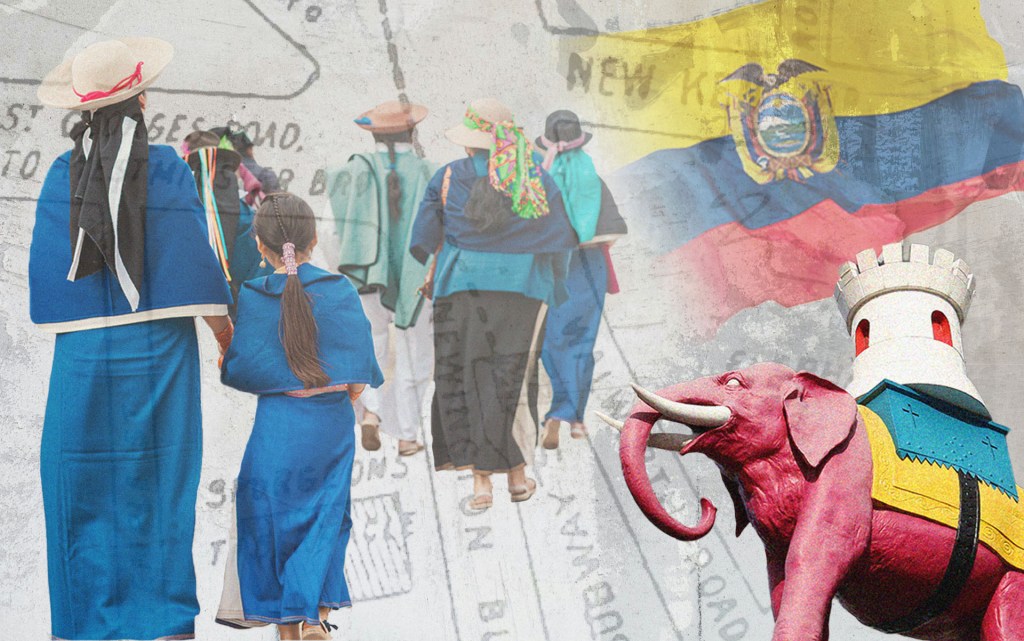
The controversial redevelopment of London’s ‘Latin Quarter’ has created winners and losers. AES Committee Members Kate Degel and James McKeigue, interviewed Ecuadorian business owners to find out how they are adapting to life in their ‘home away from home’.
According to Santiago Peluffo, a researcher with local charity Latin Elephant, the first Latin Americans to arrive in Elephant and Castle were Chileans. “The first big wave was in the 1970s, when Chileans were escaping the Pinochet dictatorship. Colombians started arriving in the 1980s, and by 1992, the first Latin American shop—a hair salon—had opened in the shopping centre.”
Ecuador’s economic crisis of the late 1990s, which resulted in the rapid and painful dollarisation in January 2000, sparked a massive wave of emigration. Most of the emigrants went to Spain or the US, although we spoke to one of the early Ecuadorian arrivals in Elephant and Castle. “I arrived in the United Kingdom 24 years ago,” remembers Luz María, owner of Salud y Vida, a natural health products store in Maldonado Walk in Elephant and Castle. “We left Ecuador because of the economic crisis there at the time. At first it was very difficult as I had to do any work that I could find. I sold products door-to-door and cleaned toilets to make ends meet. Eventually, I was able to save enough to start this small store.”
“It was a proud moment for me because back in Ecuador I had a fruit stall for 22 years. I sold fruit in the Kennedy neighbourhood, close to the old Quito airport,” says Luz María. “The United Kingdom has been good to me and my family as we have found work here and managed to succeed.”

Salud y Vida has been a success because it serves the Latin American community in London with wellness products that bring comfort to people thousands of miles from home. “I sell natural products, cures and remedies,” explains Luz María. “I have lots of Latin American remedies, that the Latino community like to use because they know they can trust these products, that they recognise from their past.”
It’s a significant market as the Latin American population in Southwark is about 9%, more when combined with the neighbouring borough of Lambeth, making it one of the largest in the UK.
Redevelopment
The early Latin American arrivals were greeted by the imposing Elephant and Castle Shopping Centre. A large modernist block that was the first US-style shopping mall in Europe when it opened its doors in 1965. After more than half a century the shopping centre had long lost any novelty or glamour yet, combined with the adjacent outdoor market, it housed more than 130 businesses, many of which were Latin-American owned.
Lenin Erazo, an Ecuadorian who first went to Spain in 2000, before coming to London in 2010, remembers it fondly as the first port of call for an immigrant looking for work. “I was looking for a job for my wife, which is when I found an advert at a well-known Ecuadorian restaurant in Elephant & Castle called Costa Azul in the shopping centre. I worked there as a kitchen porter before the owner, who was a very kind guy, gave me the chance to buy a kiosk that he had in the centre. I didn’t know how to cook but he taught me some of the traditional highland favourites, such as Guatita and Fritada. Over time, with my wife Mariela, we perfected the recipes and expanded our offering.” But in 2016 the council announced that the faded shopping centre would be demolished to make way for ‘urban development’ – ie higher-end shops and apartment blocks.
“When the demolition finally came in 2020, we had built up a wider client base and were ready for bigger things” – Lenin Erazo, Mikos Restaurant
“The announcement that the shopping centre would be knocked down was actually an opportunity for us,” says Erazo. “It meant we could get a proper restaurant site – not just a kiosk – for a cheap rent. Fortunately for us the demolition was delayed from 2017 to 2020, which gave us extra time to establish the success of our restaurant.”
Not everyone welcomed the change. Many local residents, including some Ecuadorians, worried their businesses would be pushed out by the new plans. Local charity and advocacy group Latin Elephant campaigned for small businesses to be allocated sites in the redevelopment programme.
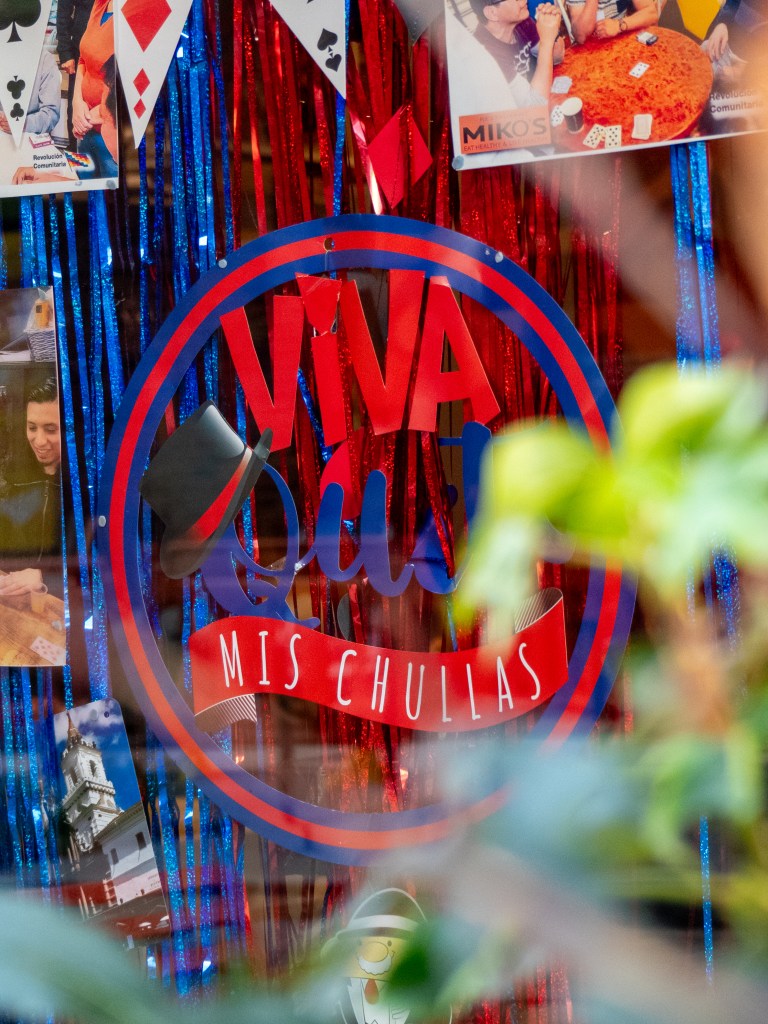
“When the demolition finally came in 2020, we had built up a wider client base and were ready for bigger things”, says Erazo. “Fortunately, Latin Elephant helped us. They fought for the Latin American businesses in the old shopping centre to be given new sites by the developers for affordable rents. I am very grateful to their work.” But this wasn’t a charitable programme – businesses had to prove they could survive in the new-look Elephant and Castle. “Of course, we had to do our bit do and develop a business plan and invest our capital,” says Erazo. “The result was that we now have a much larger and more sophisticated setting. It means we’ve had to expand our food offering. We know have an Ecuadorian chef with experience of cooking in Spanish restaurants. So nowadays our menu includes both Spanish and Ecuadorian cuisine.”
Not everyone is thriving in the new Elephant and Castle. El Guambra, a well-known Ecuadorian restaurant, struggled to regain its customer base after moving to new spaces like Castle Square. “We thought the new spot would attract new people,” said Steven Landeta, son of El Guambra’s chef, in a 2023 interview with Hawkker. “Unfortunately, it hasn’t. It feels like the design of the building hasn’t been thought about, and this has impacted us—and other traders too.”
Evolving Ecuadorian cuisine
In many ways, food is a powerful thread that connects migrant communities to their roots. Venezuelan chef Marie Anne Benavente expressed this poignantly in Vittles Magazine in 2020, noting that “no one prepares you for one of the hardest parts of becoming an immigrant, which is… leaving behind your native food and ingredients. Food is the one thing that can provide you with a stronger sense of identity than a passport or a birth certificate.”
Unlike Peruvian, Mexican or even Argentinian gastronomy – Ecuadorian cuisine has not gained international recognition. Airports or high-end shopping centres around the world will normally have Peru, Mexico or Argentine-themed restaurants, while Ecuadorian food tends to serve the immigrant market.
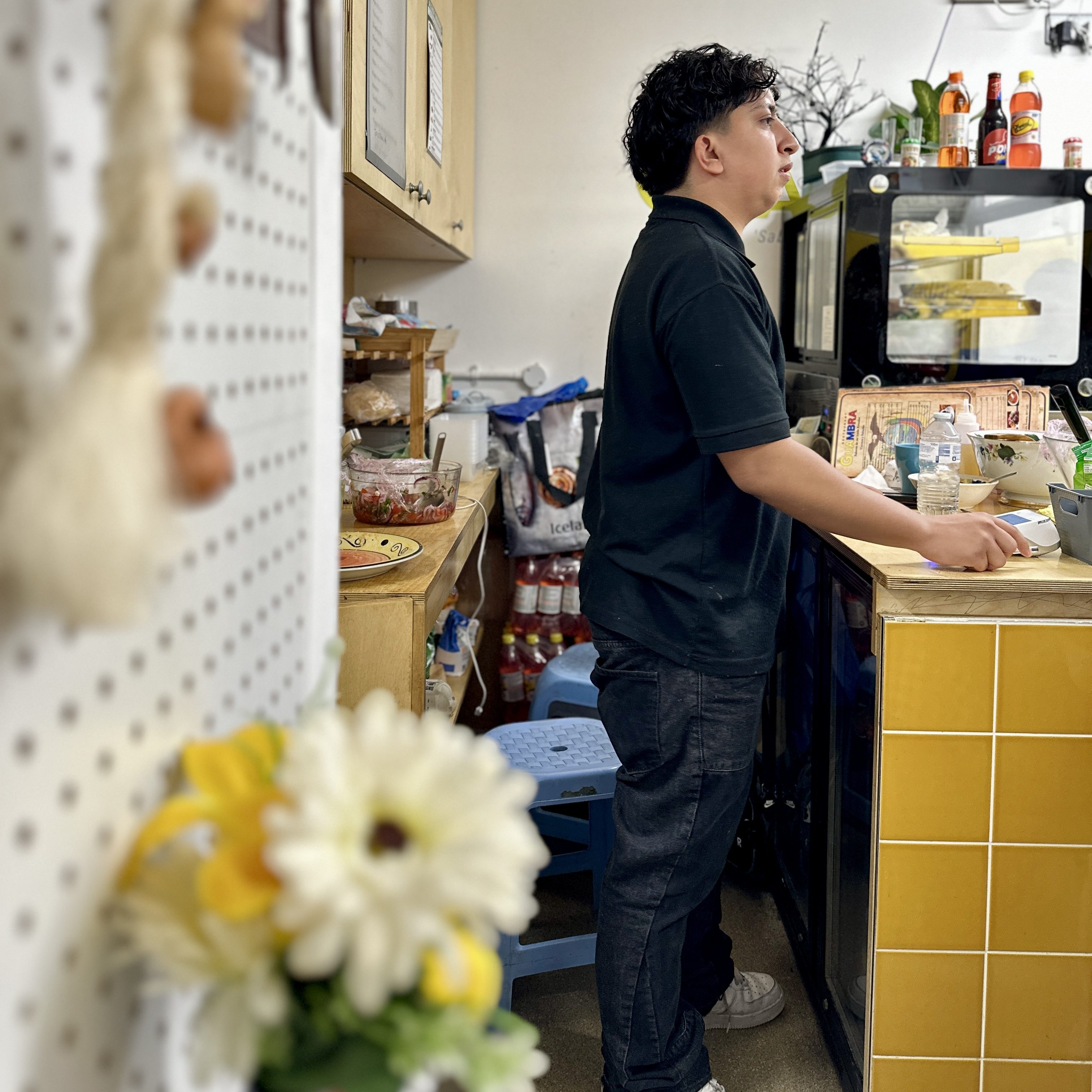
However, spurred by the redevelopment of Elephant and Castle, several Ecuadorian restaurants are adapting their menus. “The demographic of the area is changing, it’s not just Latino immigrants anymore,” say Erazo. “There is a big East Asian community and they really like Ecuadorian seafood like Ceviche or Spanish options like paella. Having Spanish food allows us to attract a wider mix of clients, but once they walk through the doors, we normally persuade them to try something Ecuadorian.”
María José Bucheli, owner of Komá, an Ecuadorian restaurant on the Walworth Road, decided to move her business to Elephant and Castle, following the regeneration. “I am one of four sisters and we started this business together,” says Bucheli. Indeed according to research from Latin Elephant, 40% of the Latin American businesses in the area are managed by women. “Ecuadorian women are very entrepreneurial. We began with a small stall in New Cross but as our popularity grew, we decided to invest in our future and open up this larger restaurant on the Walworth Road.”
“We want to change the perception of Ecuadorian food, for it to be seen as international cuisine in the same way that Peruvian or Mexican food is.” – María José Bucheli, Komá Restaurant

“We knew that it made sense to be near Elephant and Castle as it’s the spiritual home of Latinos in London,” says Bucheli. “We get lots of customers from Elephant and Castle and I think the positive knock-on effects of the development will pass down the Walworth Road. We also source a lot of our ingredients from shops in the area.”
“But despite our Ecuadorian ties, we are trying to do something different than the traditional Ecuadorian food for immigrants that miss their home countries,” says Bucheli. “We want to change the perception of Ecuadorian food, for it to be seen as international cuisine in the same way that Peruvian or Mexican food is. You see some attention on Ecuadorian food but it is normally focused on the famous chefs, not the people at the grass roots level like us who are making and selling that food to international customers every day.”
Of course, not everyone agrees with Bucheli’s approach. “Some of the Latin American clients complain that our food is more expensive but that’s because we are using the best ingredients. Most of our clients are Latin Americans but have a growing following among Londoners who are discovering Ecuadorian food for the first time.”
The redevelopment of Elephant and Castle may have surprised and disappointed some Ecuadorian business owners. But constant property redevelopment is an inherent feature of London life. Unlike other European cities, for example Paris, that have their carefully-preserved historic quarters, London’s mercantile ethos means every neighbourhood can be redeveloped for the right price. But the regular political and economic crises that most Ecuadorian entrepreneurs are used to dealing with in their home country, means many can thrive in the relatively more stable environment of London. At its peak the Elephant and Castle redevelopment project was one of the largest regeneration schemes in London. If you haven’t been yet, pop down, take in the new architecture and visit some of the restaurants and shops mentioned in this article.
Explore the My Elephant Story exhibition to learn more about the Latinx community in Elephant & Castle
A Special Thank You to Our Contributors
This article wouldn’t have been possible without the insights and stories shared by the incredible individuals who contributed their time and expertise.
🌟 Luz Maria of Salud y Vida – Thank you for your passion and dedication to promoting health and well-being. Your perspective added depth and inspiration to our story.
🌟 María José Bucheli of Komá – Your creative vision and entrepreneurial spirit are truly inspiring. We’re grateful for your valuable input and the energy you bring to your craft.
🌟 Lenin Erazo of Mikos Ecuadorian Kitchen and Restaurant – Your culinary expertise and love for Ecuadorian cuisine brought rich flavors to this piece. Thank you for sharing your journey and passion with us.
To all of you, thank you for helping us highlight the vibrant people and traditions that make our community so special.
 angloecuadoriansociety.org